Introduction
Learning the flying chess game rules is the first step toward enjoying one of the most exciting board games still popular in 2026. At first, Flying Chess may look similar to classic games like Ludo, but once the match begins, the fast movement, flying shortcuts, and competitive gameplay make it feel completely different.
What makes Flying Chess so enjoyable is the balance between luck and strategy. A single dice roll can change the direction of the game, but smart decisions still play a huge role in winning. Whether you are playing with friends at home or joining online multiplayer matches, understanding the rules properly helps you play with confidence instead of confusion.
This guide explains everything in a simple and natural way — from setup and movement to flying mechanics, safe zones, winning conditions, and practical strategies that real players actually use.
What is Flying Chess?
Flying Chess is a multiplayer board game where players race their pieces around the board and try to reach the home area before everyone else.
Each player controls four colored pieces. The game usually supports 2 to 4 players and uses a standard six-sided dice.
The main difference between Flying Chess and traditional race games is the “flying” mechanic. Certain areas on the board allow pieces to jump forward quickly, making matches faster and more unpredictable.
That one feature changes the entire pace of the game.
Understanding the Flying Chess Game Rules
The basic flying chess game rules are simple enough for beginners, but mastering them takes practice.
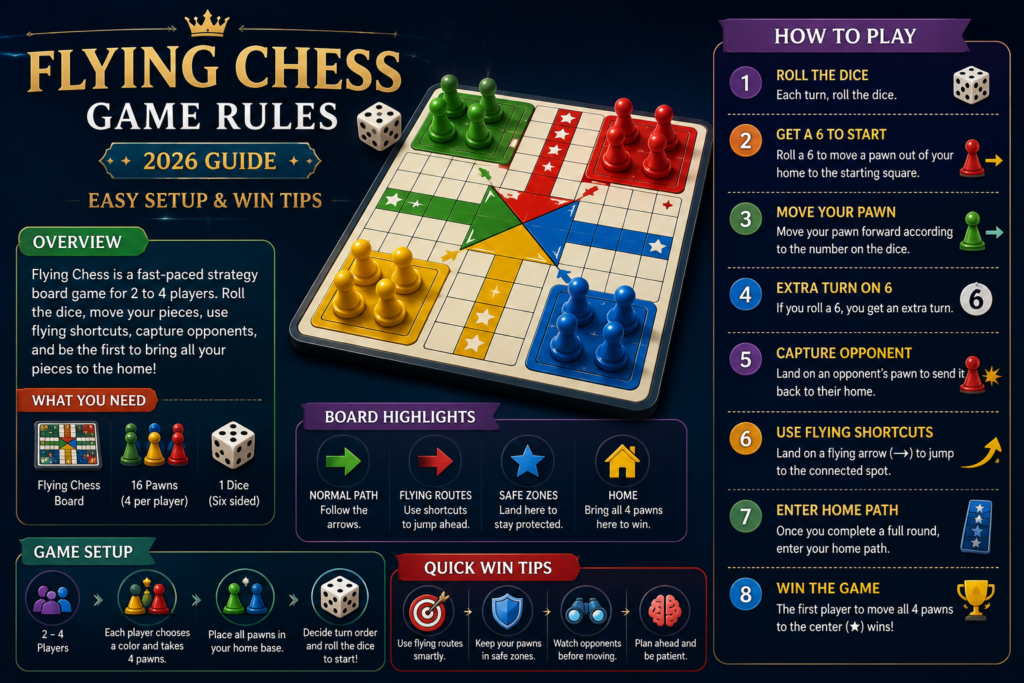
Every player starts with four pieces inside their home base. To move a piece onto the board, a player usually needs to roll a 6.
Once a piece enters the board, it moves clockwise according to the number rolled on the dice.
The goal is to guide all four pieces around the board and into the center home area before your opponents do.
Sounds easy — but the board quickly becomes competitive once pieces start interacting.
How the Game Starts
At the beginning of the game, all players choose a color.
The board contains:
- four bases
- movement paths
- flying routes
- safe zones
- center home paths
Players roll the dice in turns.
A roll of 6 usually allows:
- bringing a new piece out
- or moving an existing piece
- plus an additional turn in many versions
This creates a faster game flow right from the start.
Flying Chess Board Layout Explained
Understanding the board helps players make smarter moves.
The flying chess board is divided into colored sections. Each player follows a dedicated path that eventually connects to the central home zone.
There are also:
- shortcut flying paths
- protected safe spots
- final entry lanes toward home
The layout may look complicated initially, but after a few turns it becomes very easy to understand.
Most players learn naturally while playing.
Flying Chess Game Rules Table
Here’s a simple breakdown of the most important rules:
| Rule Area | Explanation |
|---|---|
| Starting Rule | Roll a 6 to move a piece out |
| Movement Direction | Clockwise around the board |
| Extra Turn | Rolling 6 usually gives another turn |
| Capturing | Landing on opponent sends them back |
| Safe Zones | Protected spaces from capture |
| Flying Move | Shortcut jump ahead |
| Winning Rule | First player to get all 4 pieces home wins |
This table covers the foundation of the entire game.
Movement Rules in Flying Chess
Movement is controlled completely by the dice.
After rolling, players move one of their pieces forward based on the number shown.
The interesting part is deciding which piece to move.
Sometimes moving aggressively is smart. Other times protecting a piece is the better choice.
The flying chess game rules are easy to understand, but decision-making becomes important during real gameplay
The Flying Shortcut System
The flying mechanic is what makes Flying Chess unique.
Certain colored positions on the board act as flying points. If your piece lands there, it may instantly jump ahead to another section of the board.
This can save several turns and completely change the match.
Many experienced players focus heavily on flying routes because they create huge advantages.
Without the flying system, the game would feel much slower.
Capturing Opponent Pieces
Capturing is one of the most competitive parts of Flying Chess.
If your piece lands exactly on an opponent’s position, that opponent’s piece returns to the starting base.
This rule creates tension throughout the game because no position feels fully safe.
However, safe zones protect pieces from being captured.
Good players always watch enemy positions carefully before making risky moves.
Understanding Safe Zones
Safe zones are special spaces where opponent pieces cannot attack you.
These areas are usually marked using stars or highlighted colors.
The purpose of safe zones is to balance gameplay and reduce frustration.
Without them, players could lose progress too easily.
Smart players often stop on safe spots temporarily while planning their next move.
Exact Roll Rule for Entering Home
One important detail many beginners forget is the exact roll rule.
To enter the final home area, players must roll the exact number required.
If the number is too high, the piece cannot move into home.
This rule creates suspense near the end of the game because players sometimes wait several turns for the correct roll.
Many matches are decided during this final stage.
How Winning Actually Happens
Winning Flying Chess is simple in theory:
Move all four pieces into the center home area first.
But in real gameplay, things become much more difficult because:
- opponents can capture you
- flying shortcuts change positions suddenly
- dice luck affects movement
- safe positioning matters constantly
That combination is what makes the game fun.
Strategy Tips That Actually Work
Although luck matters, strategy still plays a major role in winning.
Here are a few simple habits experienced players follow:
- Don’t move all pieces together
- Use flying shortcuts whenever possible
- Keep vulnerable pieces near safe zones
- Watch opponent movement before rolling aggressively
- Stay patient during end-game turns
Small decisions often make a big difference.
Common Mistakes Beginners Make
New players often misunderstand the flying chess game rules because they focus only on movement and ignore positioning.
One common mistake is rushing pieces too far without protection.
Another mistake is ignoring flying opportunities.
Some players also forget the exact number rule and waste turns near the finish.
Understanding these small details improves gameplay very quickly.
Physical vs Digital Flying Chess
Flying Chess is now played both physically and digitally.
Traditional board versions create a more social experience with family and friends.
Mobile versions offer:
- online multiplayer
- ranked matches
- animated gameplay
- quick matchmaking
- global competition
Despite these upgrades, the core flying chess game rules remain almost the same.
Why Flying Chess is Still Popular in 2026
Flying Chess remains popular because it is:
- easy to learn
- fast-paced
- competitive
- unpredictable
- enjoyable for all ages
Every game feels different because the board constantly changes based on dice rolls and player decisions.
That balance between luck and strategy keeps people playing repeatedly.
Advanced Gameplay Thinking
Experienced players think beyond simple movement.
They constantly ask:
- Is this move safe?
- Can I capture someone next turn?
- Should I use the shortcut now or later?
- Which piece is most vulnerable?
This deeper thinking turns Flying Chess from a casual game into a surprisingly strategic one.
Conclusion
Understanding the flying chess game rules makes the entire experience more enjoyable and competitive. While the basic rules are simple enough for beginners, the flying shortcuts, safe zones, capturing mechanics, and positioning strategies create enough depth to keep every match exciting.
Whether you play on a physical board or through a mobile app, the game rewards players who combine patience, timing, and smart movement decisions.
Flying Chess continues to stay popular because every match feels fresh, fast, and unpredictable — and that’s exactly what makes it fun.
FAQs
1. What are the basic flying chess game rules?
Players roll a dice, move pieces clockwise, use flying shortcuts, and try to bring all four pieces home before opponents.
2. How do you start Flying Chess?
A roll of 6 is usually required to bring a piece onto the board.
3. What is the flying shortcut in Flying Chess?
It is a special jump route that allows pieces to move ahead quickly.
4. Can opponent pieces capture yours?
Yes, landing on your piece sends it back to the starting base unless it is on a safe zone.
5. How do you win Flying Chess?
You win by moving all four pieces into the center home area first.