Introduction
Learning how to win flying chess every time is not about luck alone—it’s about strategy, timing, and smart decision-making. Flying Chess is a game where many players rely purely on chance, but experienced players know that consistent wins come from understanding movement patterns, probability, and tactical positioning.
In this guide, you’ll discover practical, real-world strategies that can dramatically improve your winning rate. Whether you are a beginner or someone who already plays regularly, these techniques will help you think differently, move smarter, and control the board like a pro. By the end, you’ll understand not just how to play, but how to dominate matches with confidence and consistency.
Understanding Flying Chess Basics
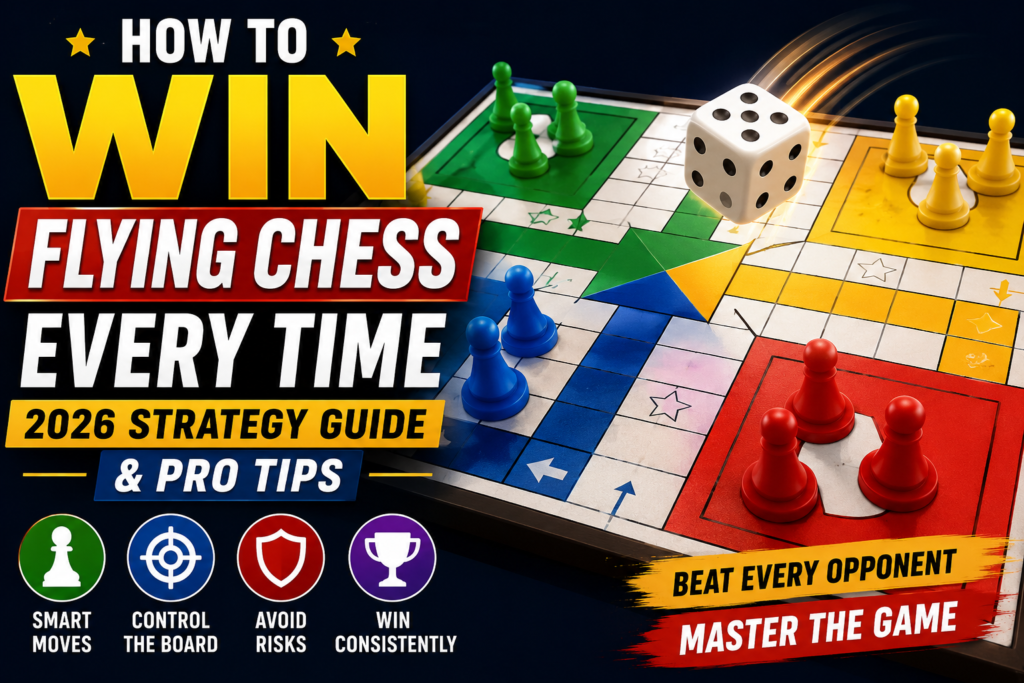
Before mastering advanced tactics, you must fully understand how Flying Chess works. It is a race-based board game where each player moves pieces from a starting point to a home area based on dice rolls. The twist is that shortcuts (or “flying paths”) allow pieces to jump ahead quickly if positioned correctly.
The game is heavily influenced by probability, but not controlled by it. Every dice roll opens multiple strategic choices, and the winner is usually the player who makes the most efficient decisions rather than the luckiest rolls.
Key mechanics include:
- Dice-based movement
- Entry rules (usually requiring a 6 or specific roll)
- Capturing opponent pieces
- Safe zones and flying shortcuts
- Race-to-home completion system
Understanding these basics is the foundation of learning how to win flying chess every time with a structured approach rather than random moves.
Why Most Players Lose in Flying Chess
Most players assume Flying Chess is a luck-driven game. That mindset is the first reason they lose consistently. In reality, losing usually comes from predictable mistakes rather than bad dice rolls.
The most common issues include:
- Moving pieces without a clear plan
- Ignoring opponent positioning
- Not using safe zones effectively
- Failing to prioritize multiple tokens
- Over-focusing on a single piece
When players act emotionally or randomly, they create opportunities for opponents to capitalize. Skilled players, on the other hand, always think two or three moves ahead.
If your goal is to master how to win flying chess every time, the first step is eliminating these beginner habits.
Core Strategies to Win Flying Chess Consistently
Winning consistently requires structured thinking. Instead of reacting to dice outcomes, you should build a strategy around control, balance, and opportunity.
The core principles include:
- Always keep multiple pieces active on the board
- Avoid unnecessary risks when ahead
- Use flying paths strategically, not randomly
- Prioritize safe positioning over aggressive moves early in the game
A major difference between beginners and advanced players is patience. Winning is not about rushing one piece to the finish line; it’s about managing all pieces like a system.
Opening Moves Strategy: Setting the Foundation
The opening phase of Flying Chess is often underestimated. However, this is where strong players build long-term advantage.
Your goal in the opening is simple: get pieces out quickly and safely.
A strong opening strategy includes:
- Unlocking all available tokens as soon as possible
- Avoiding early conflicts unless necessary
- Spreading pieces across the board for flexibility
- Watching opponent exits to avoid early capture
If you play too aggressively at the start, you risk losing momentum. The best players focus on stable expansion before engaging in battles.
Mid-Game Control: Where Matches Are Won
The mid-game is where most of the action happens. This stage determines whether you maintain control or fall behind.
To improve mid-game performance:
- Track opponent pieces carefully
- Block enemy paths when possible
- Use flying shortcuts strategically
- Rotate between pieces instead of overusing one
At this stage, smart positioning becomes more important than speed. Many players fail here because they chase one token to victory while ignoring board control.
Strong mid-game control is a key part of understanding how to win flying chess every time because it shifts the game from random chance to structured dominance.
Endgame Strategy: Finishing Strong
The endgame is where precision matters most. Even a small mistake can cost victory.
At this stage:
- Focus on getting all pieces home efficiently
- Avoid unnecessary confrontations
- Use safe zones as stepping stones
- Plan moves based on probability of dice outcomes
The biggest mistake in endgame is rushing. Players often try to finish quickly and expose themselves to unnecessary risks.
Instead, play calmly and calculate each move carefully.
Probability and Safe Zone Awareness
Flying Chess is not purely random; it is probability-based. Understanding risk levels can significantly improve your decision-making.
Here’s a simple comparison of strategic approaches:
| Strategy Type | Beginner Approach | Advanced Approach |
|---|---|---|
| Piece Movement | Moves one token repeatedly | Balances multiple tokens |
| Risk Handling | Takes frequent risks | Evaluates opponent position first |
| Safe Zones Usage | Ignored or underused | Used strategically for protection |
| Flying Paths | Random usage | Planned shortcuts for maximum advantage |
| Game Control | Reactive gameplay | Proactive board control |
This table clearly shows why advanced players win more consistently—they think ahead instead of reacting.
Psychological Advantage in Flying Chess
One of the most overlooked parts of how to win flying chess every time is psychology. The mental aspect of the game can influence decisions more than the dice itself.
Strong players maintain:
- Patience under pressure
- Focus even after setbacks
- Confidence without overconfidence
- Ability to read opponent behavior
Many players panic after losing a token, leading to rushed decisions. But experienced players treat losses as part of the strategy and continue playing logically.
Control your emotions, and you automatically improve your win rate.
Smart Techniques for Consistent Wins
Here is a simple but powerful set of practical techniques that consistently improve gameplay:
- Keep at least two tokens active at all times
- Prioritize movement that increases future options
- Avoid clustering all pieces in one area
- Always think one move ahead of opponents
- Use defensive moves when ahead in the race
These techniques may seem simple, but when applied consistently, they significantly increase winning probability.
Advanced Flying Chess Strategy Breakdown
At a higher level, winning becomes about controlling tempo. Tempo means how fast and efficiently you progress compared to opponents.
Advanced players focus on:
- Forcing opponent delays
- Controlling key board positions
- Maximizing flying shortcut opportunities
- Creating pressure without unnecessary risks
This level of thinking transforms Flying Chess from a casual game into a strategic battle of positioning and timing.
Common Mistakes to Avoid
Even experienced players sometimes fall into bad habits. Avoiding these mistakes is essential:
- Playing too aggressively in early game
- Ignoring opponent’s potential moves
- Overcommitting to one token
- Forgetting safe zones exist
- Making emotional decisions after setbacks
Eliminating these errors alone can drastically improve your win rate.
Quick Strategy Checklist (Short List)
Before each move, mentally check:
- Is this move safe or risky?
- Does it improve my overall position?
- Am I exposing myself to capture?
- Do I have better alternatives?
This simple habit can completely change how you play Flying Chess.
Building a Winning Mindset
If you want consistent success, mindset is everything. Flying Chess rewards players who stay calm, observant, and strategic.
A winning mindset includes:
- Thinking long-term instead of move-by-move
- Staying patient during slow progress
- Adapting to opponent behavior
- Avoiding emotional decision-making
Once your mindset improves, your gameplay naturally follows.
Conclusion
Mastering how to win flying chess every time is not about relying on luck—it is about mastering strategy, awareness, and patience. The players who win consistently are those who understand board control, manage multiple pieces effectively, and make decisions based on logic rather than emotion.
By applying opening stability, mid-game control, endgame precision, and psychological discipline, you can significantly improve your performance. Over time, these strategies become natural habits, turning you into a far more consistent and confident player.
FAQs
1. Is it really possible to win Flying Chess every time?
No game with dice is purely predictable, but applying strategy significantly increases your win rate and consistency.
2. What is the best strategy in Flying Chess?
The best strategy is balancing multiple tokens, controlling board positions, and avoiding unnecessary risks.
3. How important is luck in Flying Chess?
Luck matters, but decision-making and positioning have a much bigger impact over time.
4. Should I focus on one piece or multiple pieces?
Always use multiple pieces. Relying on one increases risk and reduces flexibility.
5. How can beginners improve quickly?
Focus on safe moves, understand opponent behavior, and avoid rushing pieces to the finish line.