Meta Description: Learn the most common Flying Chess Mistakes to Avoid and discover simple tips to protect your pieces, make smarter moves, and improve your gameplay.
Introduction
Flying Chess is an entertaining board game where every move can change the direction of a match. Beginners often focus only on rolling the dice and moving their pieces forward. However, winning is not just about getting lucky numbers. It also requires smart decisions, careful planning, and an understanding of the board.
Many new players make small mistakes that can put their pieces at risk or slow down their progress. Learning about these mistakes can help you understand the game better and enjoy every match with more confidence.
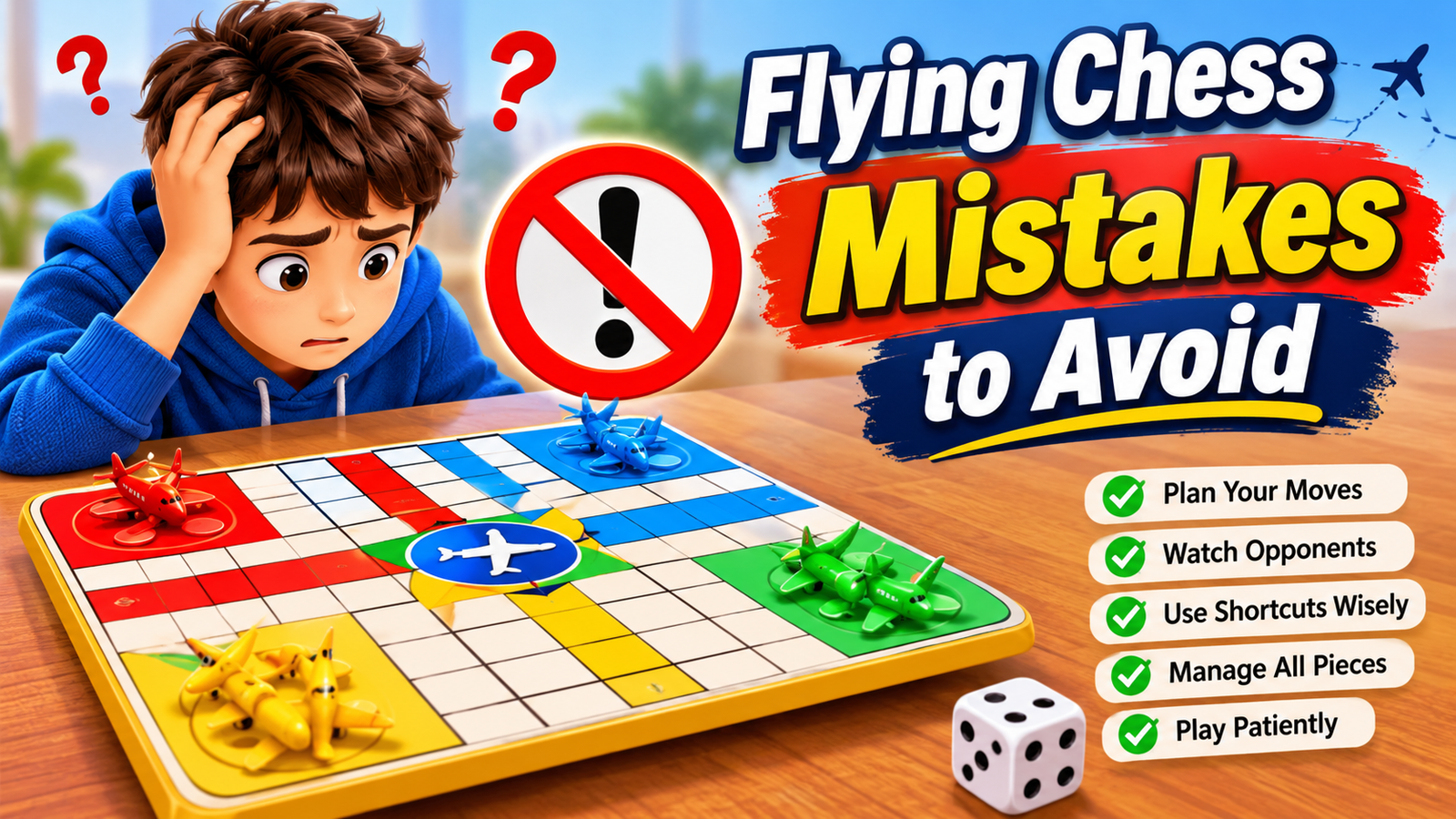
In this guide, we will explain seven common Flying Chess Mistakes to Avoid, along with practical tips to help beginners make better decisions, protect their pieces, and develop a smarter playing approach.
1. Moving Pieces Without Planning Ahead
One of the most common mistakes beginners make is moving a piece without thinking about what might happen next. They see an available dice number and immediately move the nearest piece forward.
This approach can create unnecessary risks, especially when an opponent has another piece nearby.
Before making a move, take a few seconds to check the board. Look at your current position, the distance between your pieces, and the possible moves of your opponents.
How to avoid this mistake:
- Check the positions of nearby opponent pieces.
- Think about where your piece will stop after moving.
- Compare the available moves before choosing a piece.
- Avoid making decisions only because a piece is close to the finish.
For example, if two of your pieces can move, compare their positions before selecting one. A move that looks faster may expose your piece to an opponent.
Planning one move ahead can help you make more thoughtful decisions throughout the match.
2. Ignoring Opponent Positions
Another important mistake is paying attention only to your own pieces. Flying Chess is a multiplayer board game, so other players’ positions can directly affect your progress.
An opponent may be close enough to capture your piece on their next turn. If you ignore their position, you could lose valuable progress.
Beginners should develop the habit of checking nearby opponents before every move.
How to avoid this mistake:
- Watch pieces that are close to your position.
- Check the possible movement distance of opponents.
- Avoid leaving important pieces in vulnerable positions when another move is available.
- Pay attention to opponents who are approaching the home path.
Understanding your opponents’ positions does not guarantee a win, but it helps you recognize possible risks before making a decision.
3. Using Flying Shortcuts Without Checking the Board
Flying shortcuts are one of the interesting features of many Aeroplane Chess versions. They can help pieces move forward more quickly and reduce the distance around the board.
However, beginners sometimes use every available shortcut without checking the resulting position.
A shortcut may save movement, but the destination can still create a new risk depending on the board layout and the positions of other players.
How to avoid this mistake:
- Check where the shortcut will take your piece.
- Understand the shortcut rules of your game version.
- Look for possible opponent positions near the destination.
- Consider whether the shortcut improves your overall position.
For example, reaching a new position quickly may seem helpful, but it is important to check whether an opponent can capture your piece afterward.
Remember that a shortcut should support your overall gameplay strategy rather than simply provide faster movement.
4. Focusing on One Piece Instead of Managing All Pieces
Some beginners concentrate on moving only one piece around the board. They try to send it home as quickly as possible while leaving their other pieces in the starting area.
This can limit their available movement choices.
Managing multiple pieces can give you more flexibility because different pieces may have different movement opportunities during a match.
However, bringing every piece out immediately is not always the best decision either. Your choice should depend on the current board position and the rules of your game.
How to avoid this mistake:
- Consider your available pieces before every move.
- Avoid depending entirely on one piece.
- Compare the progress of your active pieces.
- Choose moves that give you useful options in future turns.
For example, if one piece is close to a risky opponent position, another piece may offer a safer move.
Balanced piece management can help beginners become more confident and flexible players.
5. Forgetting the Exact Number Needed to Reach Home
The final stage of Flying Chess can be challenging, especially for beginners.
In many classic versions, a piece must receive the exact dice number needed to enter the home area. A higher number may not allow the piece to finish.
New players sometimes forget this requirement and expect a piece to reach home with any dice result.
This can lead to confusion and missed opportunities.
How to avoid this mistake:
- Count the remaining spaces before rolling.
- Understand how your version handles an oversized dice result.
- Check whether another piece can make a legal move.
- Stay patient when your piece is close to the finish.
For example, if your piece needs three spaces to reach home, a roll of five may not allow it to finish in a version that requires an exact count.
Understanding the finishing rules helps you prepare for the final part of the match.
6. Forgetting Special Dice Rules
Dice results can create additional opportunities in some Flying Chess versions. For example, certain versions provide an extra turn after rolling a six.
Other versions may include special conditions or penalties for repeated dice results.
Beginners who do not understand these rules may miss useful opportunities or make incorrect moves.
How to avoid this mistake:
- Read the instructions before starting a match.
- Learn when an extra turn is available.
- Understand any penalties for repeated dice results.
- Check whether your game uses one die or multiple dice.
- Follow the rules displayed in your current game version.
Not every Flying Chess game follows exactly the same dice system. Some physical board versions also use different starting conditions and bonus rules.
Learning the correct rules for your version will help you avoid unnecessary confusion during gameplay.
7. Rushing Instead of Playing Patiently
Many beginners become impatient when they are behind other players. They start making quick decisions without checking the board carefully.
This can lead to unnecessary captures, poor movement choices, and missed opportunities.
Flying Chess includes an element of luck because dice results are unpredictable. You cannot control every result, but you can control how carefully you respond to it.
How to avoid this mistake:
- Take a moment to review your available moves.
- Avoid rushing because another player is ahead.
- Focus on protecting your progress.
- Learn from mistakes instead of getting frustrated.
- Stay consistent throughout the match.
Patience is especially important near the end of a game, when every remaining move can make a difference.
More Tips to Improve Your Flying Chess Gameplay
Avoiding common mistakes is a good starting point, but beginners can also develop better playing habits through regular practice.
Here are some useful suggestions:
Understand the Board Layout
Spend time learning the different sections of the Flying Chess board. Understand the starting areas, movement paths, special spaces, and home areas used in your version.
A clear understanding of the board makes it easier to plan your next move.
Practice Before Competitive Matches
If your game provides practice or casual matches, use them to understand the controls and movement system.
You can learn how different dice results affect your pieces without worrying too much about winning.
Observe Experienced Players
Watching experienced players can help you understand how they manage their pieces and respond to different situations.
Pay attention to their decisions rather than focusing only on their final results.
Learn From Every Match
After finishing a match, think about the decisions that helped or slowed your progress.
Identifying repeated mistakes is a useful way to improve your gameplay over time.
Key Takeaways
- Always check the board before moving a piece.
- Watch opponent positions to recognize possible capture risks.
- Use flying shortcuts after understanding their destination and rules.
- Manage your available pieces instead of depending on only one.
- Learn the exact home-entry requirements of your game version.
- Understand special dice rules before starting a match.
- Stay patient and make decisions carefully.
Frequently Asked Questions (FAQs)
1. What are the most common Flying Chess mistakes?
Common mistakes include moving without planning, ignoring opponent positions, misusing shortcuts, focusing on one piece, and forgetting the exact home-entry rules.
2. How can beginners improve their Flying Chess gameplay?
Beginners can improve by learning the board layout, understanding the rules, practicing regularly, observing other players, and checking their available moves before making decisions.
3. Why should players watch their opponents in Flying Chess?
Watching opponents helps players recognize possible capture risks and understand how other pieces may affect their movement decisions.
4. Are flying shortcuts always the best option?
Not necessarily. A shortcut can save movement, but players should check its destination and understand the rules before using it.
5. What is the best way to avoid losing pieces in Flying Chess?
Check nearby opponent positions, understand safe spaces in your version, and avoid unnecessary risks. Remember that the exact protection rules can differ between versions.
Conclusion
Learning the Flying Chess Mistakes to Avoid can make a big difference in how beginners approach the game. From planning movements and watching opponents to understanding shortcuts and home-entry rules, every small decision matters.
You do not need to become an expert overnight. Start by understanding the rules, practicing regularly, and learning from each match.
Ready to improve your gameplay? Visit Flyingches.com to explore more Flying Chess guides, learn useful playing tips, and discover helpful information for your next match.
Leave a Reply