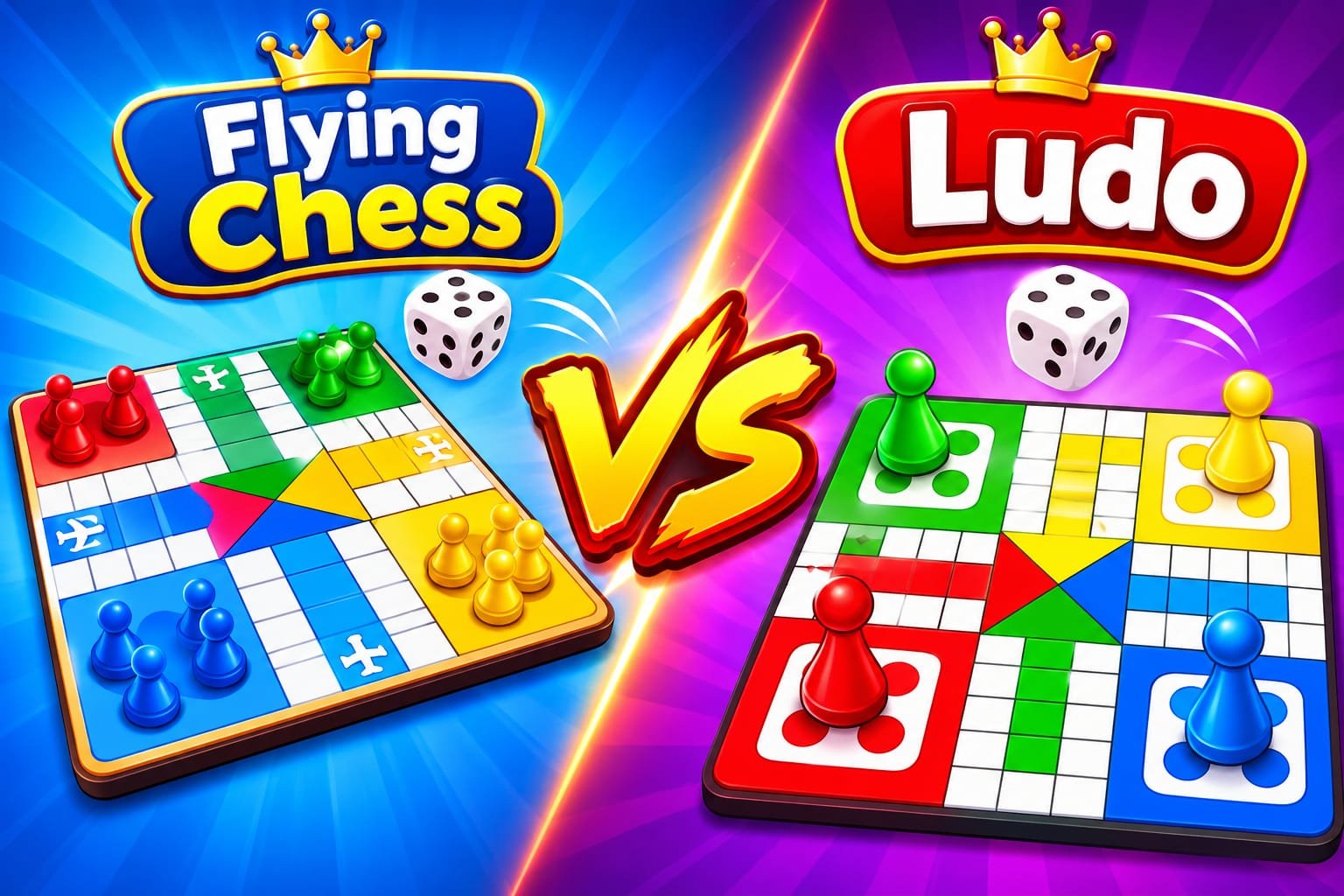
Have you ever played Ludo and wondered whether Flying Chess offers a different kind of board-game experience? Both games bring players together around dice, colorful pieces, and exciting races to the finish. However, Flying Chess introduces an airplane-themed design and special movement features that make it an interesting alternative to traditional Ludo.
Whether you are a beginner, a casual board-game fan, or someone looking for a new mobile gaming experience, understanding the differences can help you choose the game that matches your interests.
In this guide, we will compare Flying Chess and Ludo, explore their gameplay, explain their similarities, and highlight what makes each game enjoyable.
What Is Flying Chess?
Flying Chess, also known as Aeroplane Chess, is a colorful board game in which players move airplane-shaped pieces around a track and try to reach their home destination.
The game is associated with a traditional Chinese board-game format. Its recognizable airplane pieces, colorful routes, dice-based movement, and shortcut mechanics give it a distinctive appearance.
The basic objective is simple: move your airplanes from their starting areas toward the finishing destination before your opponents.
Some common features include:
- Colorful airplane-shaped playing pieces.
- Dice-based movement.
- Multiple players competing on one board.
- Special shortcuts and flying movements.
- A finishing route for each player’s color.
You can explore more about the game on our Flying Chess Game page.
What Is Ludo?
Ludo is a popular family board game in which players move colored tokens around a cross-shaped board using dice.
Each player typically has four tokens. The objective is to move all four tokens around the board and safely reach the home area before the other players.
Its straightforward rules make Ludo suitable for beginners and family gaming sessions.
Common Ludo features include:
- Four colored sets of tokens.
- Dice-based movement.
- A shared board track.
- Opponent-capturing mechanics.
- Safe spaces in many versions.
- A home path for each player.
Different Ludo editions may use slightly different rules, so the exact gameplay can depend on the version.
Flying Chess vs Ludo: What Are the Main Differences?
The biggest difference is their presentation and special gameplay mechanics.
Flying Chess uses airplane-themed pieces and flying shortcuts, while Ludo generally uses traditional colored tokens and a familiar race-around-the-board format.
Here is a simple comparison:
| Feature | Flying Chess | Ludo |
|---|---|---|
| Playing pieces | Airplane pieces | Colored tokens |
| Main objective | Guide airplanes home | Move tokens home |
| Board design | Airplane-themed paths | Cross-shaped board |
| Movement | Dice-based | Dice-based |
| Special features | Flying shortcuts and color jumps | Safe spaces and captures |
| Gameplay style | Casual and tactical | Casual and tactical |
| Learning difficulty | Beginner-friendly | Beginner-friendly |
Although both games share a dice-based format, their visual designs and individual rules create different experiences.
How Is Flying Chess Different from Traditional Ludo Gameplay?
1. Airplane-Themed Playing Pieces
One of the most noticeable features of Flying Chess is its airplane design.
Instead of traditional tokens, players control small airplane pieces. This gives the board a unique appearance and creates an aviation-inspired gaming experience.
2. Flying Shortcuts
Some Flying Chess versions include special spaces that allow airplanes to move forward through shortcuts.
These movements can help players cover more distance and change the direction of a match.
3. Color-Based Movement
Flying Chess boards commonly use four different colors. Players follow their designated routes and use special spaces according to the board’s rules.
4. A Different Visual Experience
Ludo focuses on traditional board-game styling, whereas Flying Chess uses airplanes, runways, and flight-inspired artwork.
For players who enjoy colorful and themed board games, this difference can make Flying Chess particularly appealing.
Which Game Is Easier for Beginners: Flying Chess or Ludo?
Both games are relatively easy to understand.
Ludo may feel more familiar to people who have played traditional token-based board games. Flying Chess also has straightforward gameplay, although beginners may need a little time to understand its shortcuts and special movement rules.
Here is a simple way to decide:
Choose Ludo if you:
- Prefer familiar traditional board games.
- Enjoy simple token-based movement.
- Want a classic family gaming experience.
Choose Flying Chess if you:
- Enjoy airplane-themed board games.
- Like colorful game boards.
- Want to explore flying shortcuts and different movement mechanics.
- Enjoy trying alternative versions of classic-style board games.
There is no universal winner. The better choice depends on your personal gaming preferences.
Can You Play Flying Chess and Ludo on Mobile Devices?
Yes, both Flying Chess and Ludo have digital versions designed for mobile gaming.
Mobile versions can make board games more convenient because players can access compatible games through their smartphones instead of setting up a physical board.
However, available features depend on the individual application.
Before installing a mobile game, check:
- Supported Android version.
- Device compatibility.
- Application permissions.
- Available game modes.
- Internet requirements.
- Developer and download-source information.
If you want to explore Flying Chess, visit FlyingChes.com for game information and available installation guidance.
Why Should You Try Flying Chess If You Already Enjoy Ludo?
If you already enjoy Ludo, Flying Chess can introduce a fresh visual and gameplay experience without moving too far away from the familiar dice-based board-game format.
You can explore a different theme, learn new movement mechanics, and enjoy another way to experience competitive board gaming.
For beginners, it is also an opportunity to discover how airplane-themed board games work.
The best way to understand the difference is to explore both games and decide which style you enjoy most.
Frequently Asked Questions
1. Is Flying Chess the same as Ludo?
No. Both games share some dice-based board-game mechanics, but Flying Chess uses airplane-shaped pieces and distinctive flying movements, while Ludo generally uses traditional colored tokens.
2. Is Flying Chess based on a traditional board game?
Yes. Aeroplane Chess is a traditional Chinese board-game format that uses airplane-shaped playing pieces and a race-to-home objective.
3. Which is better, Flying Chess or Ludo?
Neither is automatically better. Ludo is a familiar traditional option, while Flying Chess offers an airplane-themed alternative with special movement features.
4. Do Flying Chess and Ludo both use dice?
Yes. Both commonly use dice to determine how far players can move their pieces.
5. Can beginners learn Flying Chess easily?
Yes. The basic objective is straightforward. Beginners can start by understanding the movement rules and gradually learn the special shortcuts.
6. Can I play Flying Chess on Android?
Android availability depends on the particular game version and device requirements. Check the official game information and compatibility details before installing.
7. What makes Flying Chess interesting?
Its airplane-themed pieces, colorful board, dice-based gameplay, and special movement mechanics make it different from many traditional board games.
Final Verdict: Flying Chess or Ludo?
Flying Chess and Ludo are both enjoyable board-game options with familiar dice-based gameplay. However, they offer different visual styles and playing experiences.
Ludo remains a recognizable choice for people who enjoy traditional token-based games. Flying Chess offers something different through airplane-shaped pieces, colorful routes, and special flying movements.
If you enjoy exploring new board games, Flying Chess is worth discovering.
Ready to explore Flying Chess? Visit FlyingChes.com to discover more game information, helpful guides, and available download details.
Explore a different way to enjoy the world of board gaming!
Leave a Reply